
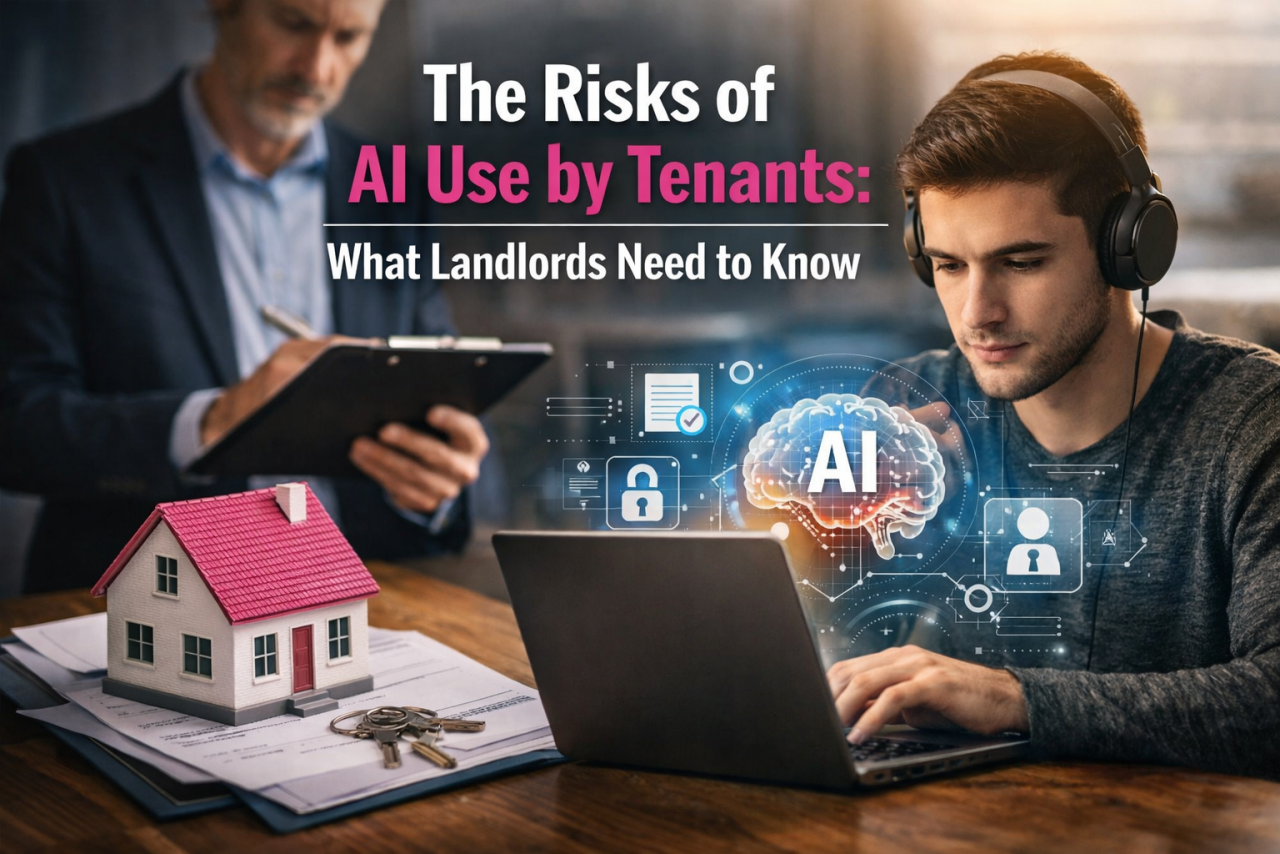
At Pink Property Ltd, we're seeing first-hand how quickly technology is changing the private rental market. Artificial intelligence - once the preserve of large corporations and tech companies - is now in the hands of everyday consumers. Tenants are using AI tools in their daily lives, often without landlords even being aware of it.
AI brings real convenience and efficiency, but it also introduces a new and evolving set of risks for landlords. Thinking only about traditional concerns like rent collection and maintenance is no longer enough. There's now a digital dimension to property ownership that needs to be understood and managed.
Fraudulent applications are becoming harder to spot
One of the most pressing issues we're encountering is the increasing sophistication of tenant applications. AI tools can now produce highly convincing documents in a matter of seconds. Payslips, employment references and bank statements can be generated in a way that looks entirely legitimate at first glance. For landlords who rely on visual checks or basic referencing, this is a genuine danger - what might once have been easy to identify as a fake is now far harder to detect.
This raises the risk of tenants entering tenancies under false pretences, potentially leading to missed rent, costly disputes and, in some cases, property damage. Thorough, professional referencing has never mattered more. Verifying information directly - rather than relying solely on documents supplied by the applicant - is increasingly essential.
How tenants are using properties is changing too
Beyond the application stage, AI is shaping how rental properties are actually used. We're seeing cases where tenants are running AI-powered businesses from home - sometimes involving high-powered computing equipment, servers or cryptocurrency mining setups.
For landlords, this raises a number of practical concerns: higher electricity consumption, increased wear and tear, and potential safety issues. More importantly, these kinds of activities may breach the terms of a standard residential tenancy agreement. Without clear boundaries in place, landlords can find themselves unknowingly hosting commercial activity within a property they intended for residential use.
Unauthorised subletting is getting easier
AI is also making it easier for tenants to sublet without their landlord's knowledge. Online platforms have long made it possible to advertise rooms or whole properties, and AI now adds a further layer - enabling polished listings, automated responses to enquiries and chatbot-style communication with prospective sub-tenants.
The consequences can be significant. Properties may become overcrowded, insurance policies could be invalidated, and landlords may find their legal responsibilities become unclear. In our experience, regular inspections and well-drafted tenancy agreements are the most effective way to get ahead of this.
Disputes are becoming more formalised
There's also a subtler but important shift happening around communication and disputes. AI tools can help tenants draft formal complaints or legal correspondence that is articulate, well-structured and persuasive. While it's entirely right that tenants can communicate effectively, it does mean that landlords are increasingly dealing with more sophisticated, formalised challenges.
Situations that might once have been resolved with a quick conversation can now escalate more rapidly, with deposit disputes, maintenance disagreements or contractual issues presented in highly professional terms, often with legal language attached. This makes it more important than ever for landlords to keep thorough records and ensure all agreements and communications are clear, consistent and well-documented.
Smart devices and privacy
The growing use of AI-powered devices in the home also raises questions around privacy and security. Many tenants now have smart speakers, cameras and connected devices as part of everyday life. While these offer convenience, they can create issues around data use and surveillance within the property.
It's worth landlords being aware of how such devices might interact with the property itself - there are increasing concerns around unauthorised recording, cybersecurity vulnerabilities and potential disputes arising from perceived privacy breaches. While the primary responsibility sits with the tenant, setting clear expectations in the tenancy agreement is a sensible precaution.
The law hasn't kept pace with technology
Perhaps the most challenging aspect of all is that regulation is still catching up with the pace of change. The legal framework around AI is still developing, and there is currently limited guidance on how it applies specifically within the private rental sector. For landlords, this creates genuine uncertainty - particularly when issues arise involving AI-generated content or digital activity on their property.
What landlords can do now
At Pink Property Ltd, we believe awareness is the first step. AI isn't something to fear, but it is something to understand. Landlords who take a proactive approach will be far better placed to protect their investments.
That means strengthening tenant screening processes and making sure all information is properly verified. It means reviewing tenancy agreements to clearly define acceptable use of the property - including restrictions on subletting and commercial activity. And it means keeping up with regular inspections to catch any unusual activity early.
Staying informed about trends in the rental market will also help landlords adapt as things change. The role of a knowledgeable, proactive letting agent is becoming increasingly valuable in this landscape.
AI is here to stay, and its influence on the rental market will only grow. By recognising the risks and taking sensible, practical steps, landlords can stay in control and keep their properties protected. At Pink Property Ltd, we're committed to helping you do exactly that.


Share this with
Email
Facebook
Messenger
Twitter
Pinterest
LinkedIn
Copy this link